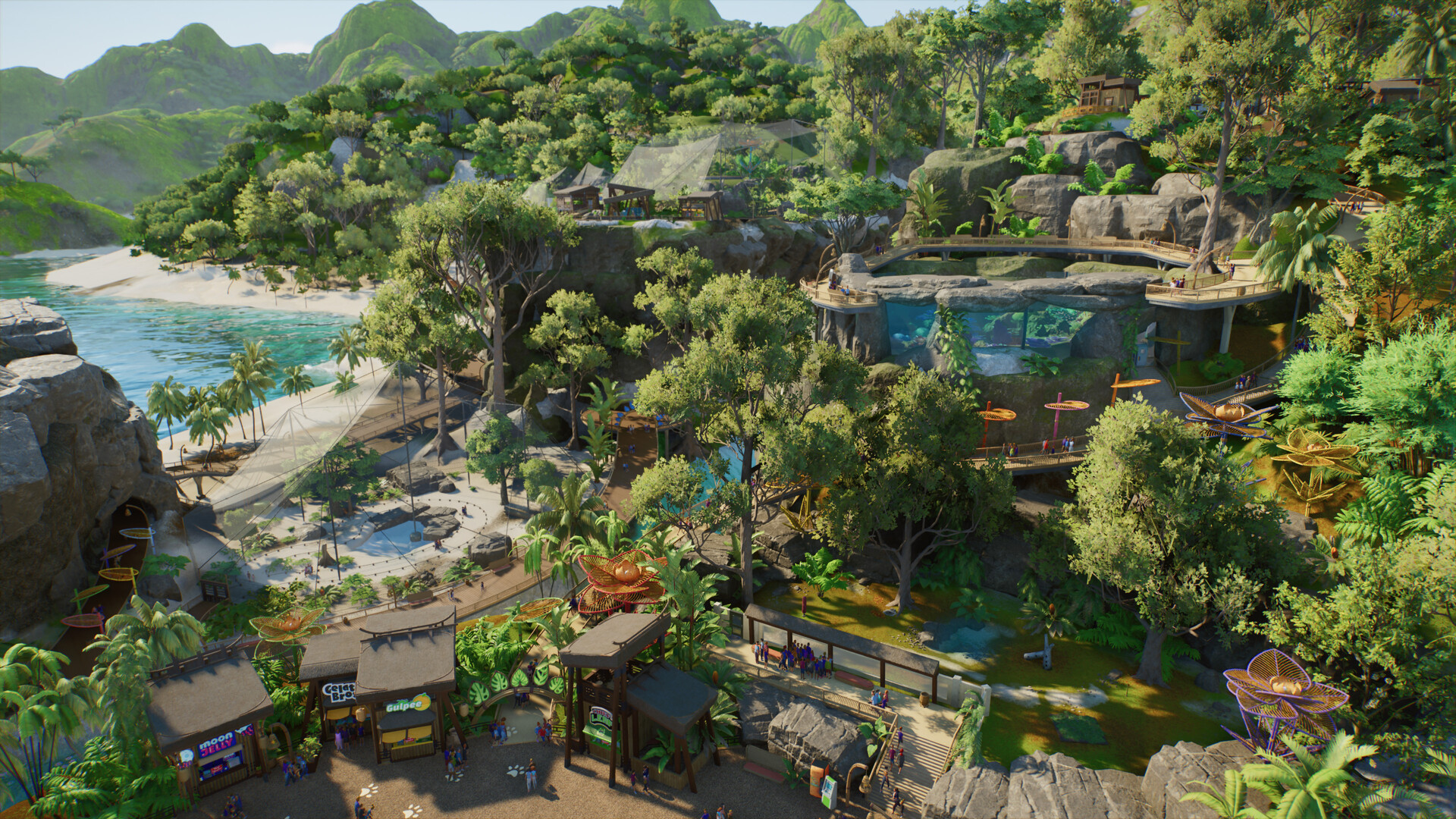
What makes exhibits different?
Exhibits house smaller species such as frogs and snakes, come in different shapes and sizes, and have fully customisable interiors; some allow guests inside, including the butterfly exhibit. Terrestrial habitats provide environments for land animals, aviaries add covered spaces for freely flying birds, and aquariums provide custom underwater homes for fully aquatic animals.
Compare the animal homes before building
| Option | What to plan around |
|---|---|
| Exhibits | Smaller animals such as frogs and snakes, different enclosure shapes and sizes, and customisable interiors. Walkthrough access applies to some exhibits, with a butterfly exhibit shown as an example. |
| Terrestrial habitats | Environments that reflect the resident species' natural surroundings, with appropriate space, terrain, plants, food, water, social conditions and enrichment. |
| Aviaries | Customisable bird habitats built with barriers, support poles and mesh covers. Birds can fly and perch inside; guest walkthroughs depend on whether the chosen birds can safely share that experience. |
| Aquariums | Custom underwater habitats for swimming animals, including turtles, rays, fish and sharks. Match filtration to marine, freshwater or brackish species, provide suitable feeders, and include an aquarium staff gate. |
Start with the animal you want to care for, then choose its housing. An attractive enclosure is a useful design goal, but make the animal's requirements your starting point. Leave decorative decisions until you have a clear plan for its living environment.
Plan exhibits around their residents
Exhibit design includes a choice of shapes and sizes alongside a fully customisable interior. Frogs and snakes are examples of the smaller residents these homes accommodate. The butterfly walkthrough also shows why you should consider guest access when choosing an exhibit.
Check the intended animal's requirements before settling on an exhibit design or a shared enclosure. Use the official Zoopedia to learn about the species, then build your plan around the animal you actually want to house. Treat each proposed combination as a separate compatibility decision.
Check flight, water and shared-space conditions
Aviaries are fully customisable habitats with a covering generated using support poles after the walls are placed. Their birds interact with the environment through behaviours such as natural perching. A Toco Toucan walkthrough demonstrates guest access, but the bird you choose matters because some birds do not welcome visitors.
Shared housing can extend beyond birds alone: the Great Hornbill aviary demonstration includes a Malayan Tapir family. Cohabitation can save space, and some animals need it to thrive. Use that example as a reason to investigate suitable companions for your chosen residents, rather than assuming every pairing will work.
Aquarium planning needs a separate check of water conditions and animal compatibility. Aquatic residents include marine, freshwater and brackish species, and not all aquatic animals can be mixed. The filtration must suit the residents, while feeder choice depends on the animals being fed.
Include staff access in an aquarium design through an aquarium staff gate, allowing vets to check animals and keepers to replenish food. Glass tunnels offer underwater views for guests. Plan those viewing opportunities alongside the practical access your animal-care team needs.
Choose housing in a practical order
- Check your chosen species' requirements before selecting its home. This gives you an animal-led starting point for deciding between an exhibit, terrestrial habitat, aviary or aquarium.
- Choose an exhibit shape and size around your intended interior design. Exhibits offer different forms and fully customisable interiors, giving you a starting point for arranging the smaller animal's home.
- Check compatibility before committing to shared housing. Aquatic animals cannot all be mixed, while the Great Hornbill and Malayan Tapir demonstration provides a specific example of shared aviary housing.
- Match an aquarium's filtration to its residents' water conditions. This prepares the appropriate system for marine, freshwater or brackish animals and helps keep their aquarium clean.
- Check whether your intended walkthrough suits the animals. Some exhibits permit entry, while aviary walkthroughs depend on safe access and choosing birds that tolerate visitors.
- Invest in species research when aiming for Thriving status. Research develops your understanding of what the animal needs in the wild and unlocks improved welfare options.
Balance animal welfare with the guest view
Every animal has welfare requirements covering food and water, space, terrain, plants, social conditions and enrichment. Guests also want a good view, while animals need opportunities to hide from visitors and recover from stress. Make privacy part of your enclosure plan alongside the viewing areas.
Thriving goes beyond simply meeting an animal's welfare needs. A natural, enriching environment enables animals to thrive, live longer and encourage more guest donations. Keep improving the residents' environment after the enclosure is built, with species research guiding those improvements.