Which animals can you plan your zoo around?
Planet Zoo 2 animals include the Lion, Western Chimpanzee, Giant Panda, Sumatran Orangutan, Hawksbill Turtle, West Indian Manatee, Toco Toucan and many more named below. Visit the official Planet Zoo 2 Zoopedia for species information, including natural habitat descriptions and Social & Reproduction details.
Named animals and useful care considerations
Use this table to shortlist animals and identify details worth checking before you build. Natural-history descriptions help you understand a species; use its gameplay welfare requirements when deciding habitat dimensions, group composition and enrichment.
| Animal | Details |
|---|---|
| African Leopard | Named in an Animal Spotlight as a launch animal. |
| African Tigerfish | Shown released into a Wildlife Reserve in the aquatic feature. |
| Amazonian Giant Centipede | Named in a Zoopedia update. |
| Asian Elephant | Shown released as a group into a Wildlife Reserve. |
| Blacktip Reef Shark | Named among the fully aquatic animals. |
| Bluespine Unicornfish | Named in a Zoopedia update. |
| Boeseman's Rainbowfish | Named in a Zoopedia update. |
| Diamondback Terrapin | Named in a Zoopedia update. |
| Galapagos Giant Tortoise | Named in a Zoopedia update. |
| Giant Forest Scorpion | Named in a Zoopedia update. |
| Giant Panda | Bamboo dominates its diet; solitary animals need space and opportunities to isolate themselves. |
| Giant Tiger Land Snail | Named in a Zoopedia update. |
| Great Hornbill | Shown sharing an aviary habitat with Malayan Tapirs and using a Cavity Nest. |
| Hawksbill Turtle | Named among the aquatic animals and shown housed in an aquarium. |
| Indian Ocean Oriental Sweetlips | Named in a Zoopedia update. |
| Indo-Pacific Leopard Shark | Named in an Animal Spotlight as coming to the game. |
| Indo-Pacific Sergeant | Named in a Zoopedia update. |
| Lehmann's Poison Frog | Named in a Zoopedia update. |
| Lion | Social animals living in prides; male challenges can lead to aggression. |
| Long-Eared Owl | Featured in an aviary; the showcased owl is most active at night. |
| Long-tailed Parakeet | Highly social groups may gather into flocks; the species nests in tree cavities. |
| Malayan Tapir | Shown sharing a habitat with Great Hornbills. |
| Masai Giraffe | The gameplay example highlights vegetation for the family group and fresh water. |
| Menelaus Blue Morpho | Named in a Zoopedia update. |
| Mountain Hare | Prefers cool, densely covered environments; largely solitary and hides in ground depressions during daylight. |
| North Sulawesi Babirusa | Named in a Zoopedia update. |
| Ocean Sunfish | Showcased among the announcement trailer's aquatic species. |
| Old World Swallowtail | Named in a Zoopedia update. |
| Pacific Bluefin Tuna | Named in a Zoopedia update. |
| Plains Zebra | Shown moving through a habitat in the announcement trailer. |
| Red Lionfish | Introduced in the aquarium feature. |
| Red Panda | Mainly eats bamboo; solitary, territorial animals like places to hide and isolate themselves. |
| Sacred Scarab Beetle | Named in a Zoopedia update. |
| Saltwater Crocodile | Shown swimming and basking on wooden platforms. |
| Schooling Bannerfish | Named in a Zoopedia update. |
| Secretarybird | Included among flying birds; the aviary feature highlights time spent on the ground. |
| Shoebill | A solitary freshwater-swamp bird; breeding pairs may forage apart. |
| Sumatran Orangutan | Generally lives alone except for mothers with young, but dislikes complete isolation from other orangutans. |
| Sumatran Tiger | The behaviour example shows lethargy when unhappy with its environment. |
| Threespot Damselfish | Named in a Zoopedia update. |
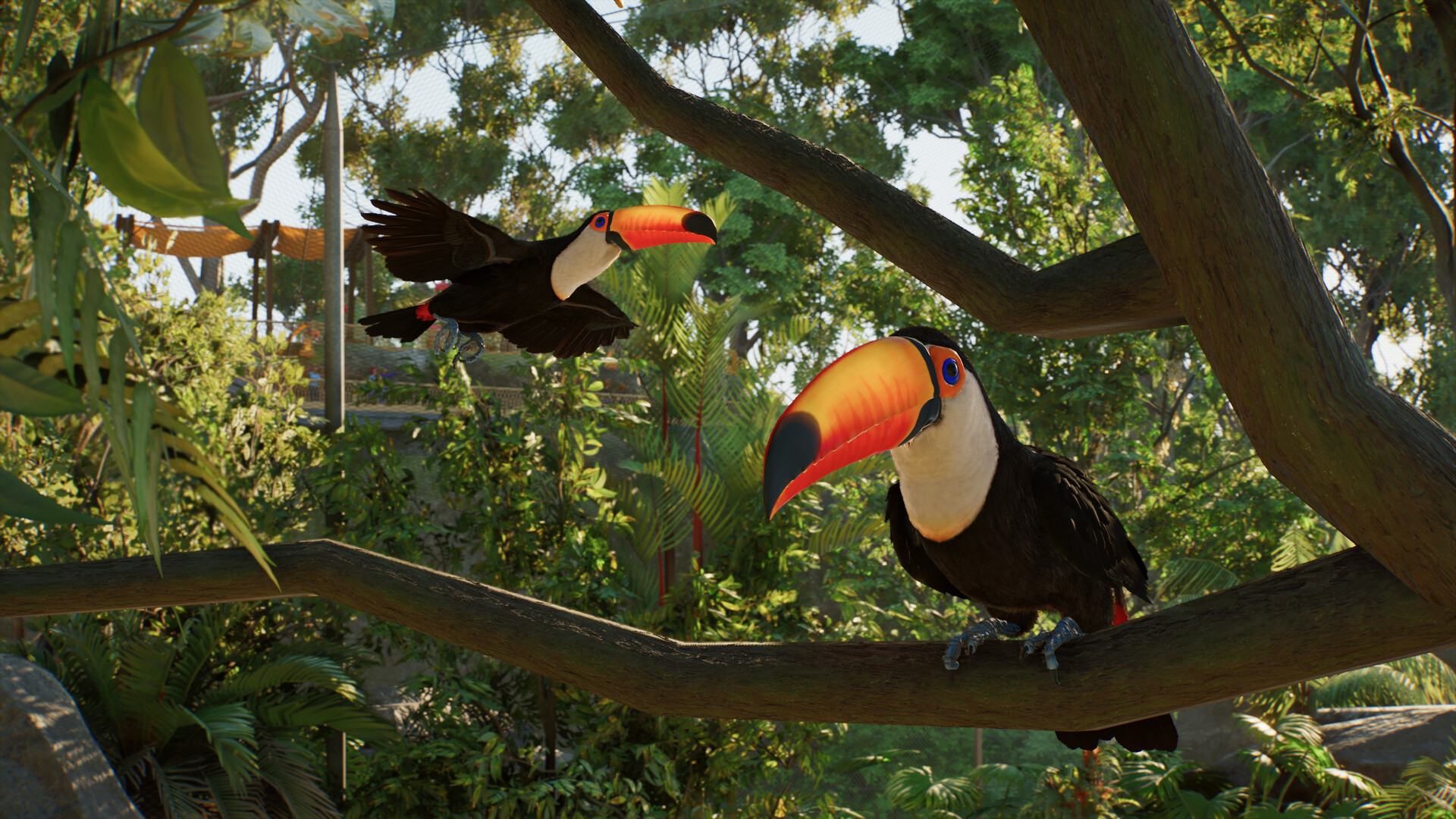
| Toco Toucan | Shown perching in an aviary and featured in a guest walkthrough. |
| West Indian Manatee | Prefers warm, calm waters with aquatic vegetation; semi-social, with males generally solitary. |
| Western Chimpanzee | Highly social; game behaviours include climbing, jumping and sleeping on climbing frames. |
| Western Diamondback Rattlesnake | Named in a Zoopedia update. |
| Western Lowland Gorilla | Named in a Zoopedia update. |
| White-backed Vulture | Named in a Zoopedia update. |
| White-tailed Sea-eagle | Shown housed in an aviary with space to spread its wings. |
| Wild Boar | The starter-zoo example adds enrichment and water filtration to its terrestrial habitat. |
How to use a Zoopedia entry before adopting
Start with the species entry in the official Zoopedia and read its habitat description alongside Social & Reproduction. The Giant Panda entry describes dependence on bamboo and opportunities for isolation, while the Long-tailed Parakeet entry describes highly social groups. Use those differences to frame your care checks before choosing animals.
Before adopting, check food and water access, habitat space, terrain, plants, social requirements and enrichment. Each animal has its own welfare requirements, so review the species you actually want rather than copying another enclosure. Treat biological body measurements and breeding descriptions as species information rather than enclosure limits.
Pay particular attention to social differences between similar-looking choices. Western Chimpanzees are highly social, whereas Sumatran Orangutans generally live alone but dislike complete isolation from their counterparts. Read each entry separately when planning an ape area.
Check compatibility before sharing a habitat
Aquatic animals cannot all be mixed together. The game includes marine, freshwater and brackish species, and the aquatic feature tells players to provide appropriate filtration. Check water suitability before grouping animals, then choose feeders that suit the species being housed.
For a specific cohabitation example, Great Hornbills are shown sharing a habitat with Malayan Tapirs. Cohabitation can save space, and some animals need it to thrive. Use that example as a starting point for planning, then check the requirements of your chosen combination.
Guest access deserves a separate check when planning an aviary. Toco Toucans are featured in a walkthrough, but the bird feature warns that other birds may not welcome visitors. Plan viewing opportunities alongside places where animals can retreat from guests to avoid stress.
Prepare adoption, research and ongoing care
The animal trade center lets you adopt animals and view stored animals across your zoos. Adopted animals wait in storage until their homes are ready. Use that breathing room to review care requirements and prepare the habitat before arranging delivery.
Research is part of improving animal care. Investing veterinary time unlocks new items and welfare options, and research is required before an animal can reach Thriving status. A natural, enriching environment can then help animals live longer and encourage greater guest donations.
Keep watching the animals after they arrive. The behaviour system reflects their mood, with the Sumatran Tiger example showing lethargy when unhappy with its environment. Use visible behaviour as a prompt to review welfare and adjust care.